
Calculate a starting drill size for a common metric cutting tap
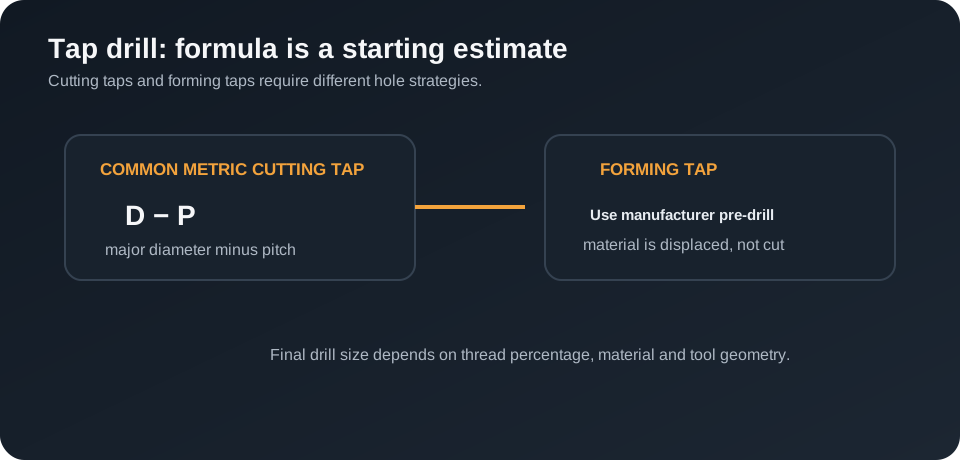
This calculator uses the familiar major-diameter-minus-pitch relationship as a practical starting estimate for common metric cutting taps. It is useful for understanding the relationship between thread diameter, pitch and pre-drill size, but it is not a replacement for the tap manufacturer’s chart or an application-specific machining recommendation.
Formula used by the tool
Approximate tap drill diameter = nominal major diameter − pitch. For example, an M8 × 1.25 thread gives an approximate value of 6.75 mm. A manufacturer chart may specify the nearest standard drill size or a different recommendation based on desired thread percentage, material and tap design.
Why the exact drill size can differ
Thread percentage, material behavior, tool geometry, coating and production requirements can all change the preferred pre-drill size. A larger pre-drill generally reduces cutting load but leaves less thread engagement; a smaller hole increases cutting load and the risk of tap failure. Do not optimize that tradeoff from a generic formula when the tap manufacturer provides a tested value.
Cutting taps and forming taps are not interchangeable
A forming tap displaces material rather than cutting chips and therefore requires a different pre-drill calculation. Do not use this calculator for thread-forming taps. Use the forming-tap manufacturer’s recommended hole size and lubrication guidance.
Blind holes need additional planning
Usable depth, tap lead, chip space and bottom clearance matter in a blind hole. A calculated diameter tells you nothing about whether there is enough depth for full-form threads or a later insert driver. Measure depth separately.
Best use of this calculator
Use it to sanity-check a metric cutting-tap setup, understand why a chart value is in the expected range, or plan a preliminary workflow. Before machining a valuable or safety-critical component, verify the exact tap, material and drill recommendation from the tool or repair-system manufacturer.