
Stuck & Seized Fasteners
Resistance has a cause: identify it before adding torque
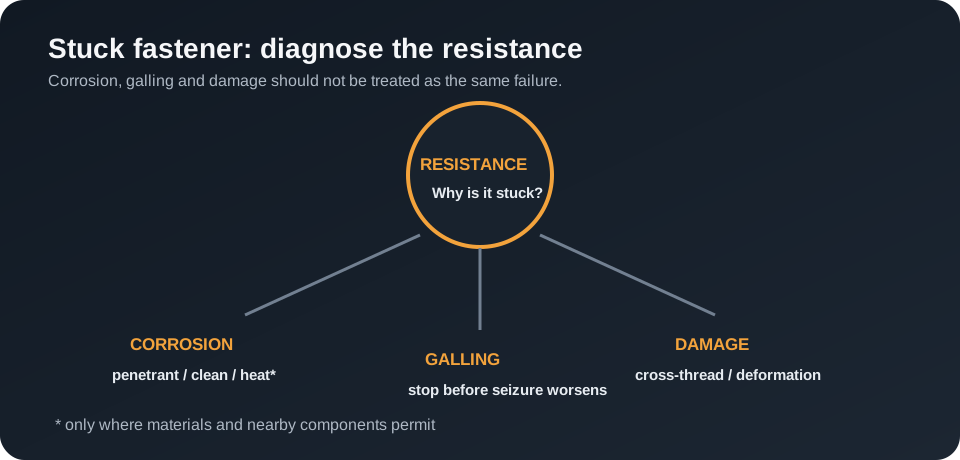
A fastener can feel stuck because of external corrosion, corrosion inside the joint, threadlocker, galling, cross-threading, damaged threads, deformation or load on the joint. More torque without diagnosis often converts a removable fastener into a rounded head or broken bolt.
Use controlled escalation
Cleaning exposed threads, reducing joint load, applying a suitable penetrant, using vibration or impact, and applying controlled heat are different tools for different mechanisms. Heat may be inappropriate near seals, fuel, coatings, electronics or heat-treated components. Stainless-on-stainless galling behaves differently from ordinary red rust and can worsen rapidly once the surfaces begin to seize.
Watch the fastener, not just the wrench
If a shank visibly twists, the drive begins to round, the nut tightens during removal or the surrounding component moves, stop. Those signs tell you the failure mode is changing.
Prevention belongs in the repair
Clean threads, correct installation speed, suitable lubrication or anti-seize when specified, and correct tightening procedure can reduce repeat failures. Do not add lubricants to a torque specification unless the specification accounts for them, because friction changes clamping force.
Use this hub to identify the mechanism
The guides below cover rusted bolts, stainless galling, steel fasteners seized in aluminum, stuck nuts, penetrating oil, controlled heat and the point at which additional force is more likely to cause damage than solve the problem.
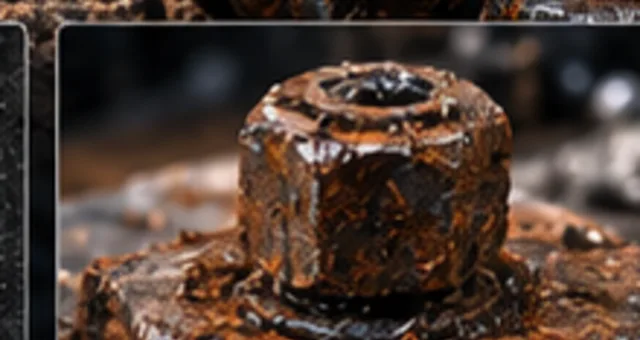 Stuck Fasteners
Guides in this hub
Focused answers, decision guides and reference pages.
How to Remove a Stuck Nut
How to Remove a Stuck Nut.
Read guide →How to Remove a Seized Stainless Steel Fastener
How to Remove a Seized Stainless Steel Fastener. Practical FastenerBench guidance on diagnosis, least-destructive repair options, tools, risks and when to.
Read guide →How to Remove a Steel Bolt Seized in Aluminum
How to Remove a Steel Bolt Seized in Aluminum.
Read guide →Why Stainless Steel Fasteners Gall
Why Stainless Steel Fasteners Gall.
Read guide →Penetrating Oil vs Heat for Stuck Bolts
Penetrating Oil vs Heat for Stuck Bolts.
Read guide →How Long Should Penetrating Oil Sit on a Rusted Bolt?
How Long Should Penetrating Oil Sit on a Rusted Bolt. Practical FastenerBench guidance on diagnosis, least-destructive repair options, tools, risks and whe.
Read guide →Why a Bolt Gets Tighter While You Are Removing It
Why a Bolt Gets Tighter While You Are Removing It. Practical FastenerBench guidance on diagnosis, least-destructive repair options, tools, risks and when t.
Read guide →When to Stop Trying to Remove a Seized Fastener
When to Stop Trying to Remove a Seized Fastener. Practical FastenerBench guidance on diagnosis, least-destructive repair options, tools, risks and when to.
Read guide →How to Remove a Seized Bolt Without Breaking It
How to Remove a Seized Bolt Without Breaking It. Practical FastenerBench guidance on diagnosis, least-destructive repair options, tools, risks and when to.
Read guide →How to Remove a Rusted Bolt
How to Remove a Rusted Bolt.
Read guide →