
Broken Bolt Removal
Start with break position, access and parent material
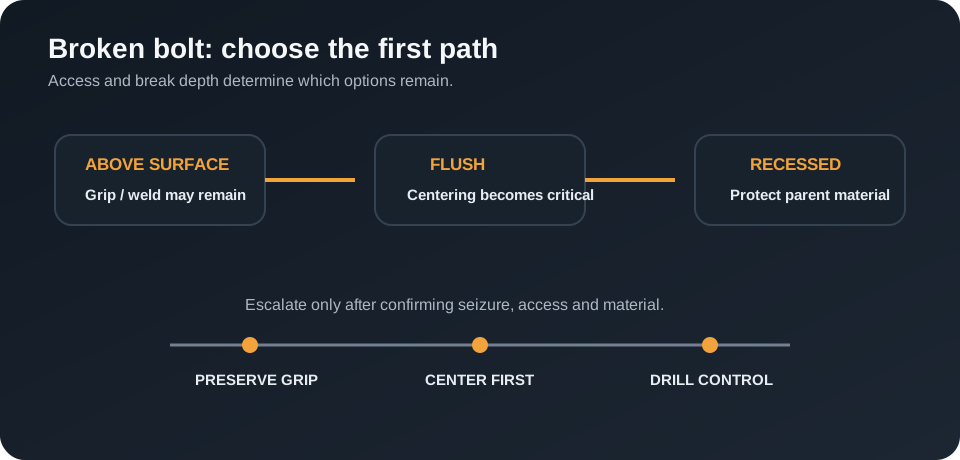
A broken fastener is not one problem. A stud protruding above a surface leaves gripping options that disappear once the break is flush or recessed. Corrosion, galling, threadlocker, cross-threading and simple overload can all change the safest removal path. Start by identifying what is still accessible and what material surrounds the fastener before choosing a tool.
Choose the least destructive useful method
Clean the area, improve access and preserve a reliable center reference before drilling. If a fastener still projects above the surface, controlled gripping or welding may be possible in suitable applications. If it is recessed, accurate centering becomes more important because a wandering drill can damage the parent threads long before the broken fastener is removed.
Common escalation path
- Confirm access and whether the fastener is actually seized.
- Use penetrating treatment or controlled heat only when the materials and surrounding components allow it.
- Preserve the center and try a suitable left-hand drill where appropriate.
- Use an extractor only when a centered pilot hole, extractor size and remaining fastener wall make sense.
- Move to controlled drilling or thread repair only after less destructive options are no longer reasonable.
Failures that deserve extra caution
An extractor that begins to twist, a drill that walks into the parent material, a thin aluminum boss, or a safety-critical joint are all reasons to stop and reassess. The cost of damaging the component can quickly exceed the cost of removing the broken fastener.
Use this hub as a decision map
The guides below separate above-surface, flush and below-surface breaks, aluminum and steel parent materials, rusted or stainless fasteners, drilling strategy, extractor failures and the point at which thread repair becomes part of the job.
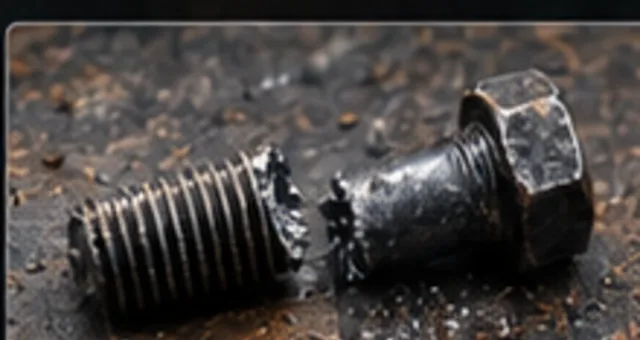 Broken Bolts
Guides in this hub
Focused answers, decision guides and reference pages.
What to Do When a Screw Extractor Breaks Inside a Bolt
What to do after a hardened screw or bolt extractor breaks inside the pilot hole.
Read guide →Broken Bolt Extractor vs Left-Hand Drill Bit
Try a left-hand drill bit before a tapered extractor when you can create a centered pilot hole. The drill bit removes material while applying…
Read guide →Why Bolts Snap During Removal
Bolts usually snap during removal because required breakaway torque exceeds the remaining strength of the shank. Corrosion, galling, damaged threads, overtightening and reduced cross-section…
Read guide →Can You Reuse the Threads After Drilling Out a Broken Bolt?
You can reuse the original female threads only if drilling and extraction did not remove or deform them. Inspect, clean and gauge the hole…
Read guide →Broken Bolt Removal: When to Drill, Extract, Weld or Stop
A decision guide for choosing between gripping, reverse drilling, extraction, welding and professional removal.
Read guide →How to Center a Drill on a Broken Bolt
Accurate centering matters more than drilling speed. Clean the fracture, mark the geometric center, create a real punch dimple, and use a small rigid…
Read guide →How to Remove a Broken Bolt Below the Surface
How to remove a bolt broken below the surrounding surface while protecting the original threaded hole.
Read guide →Left-Hand Drill Bits for Broken Bolts: When They Work
A left-hand drill bit cuts while rotating counter-clockwise, so it can create the pilot hole and sometimes loosen a conventional right-hand threaded bolt at…
Read guide →How to Remove a Broken Bolt Flush With the Surface
A practical sequence for removing a bolt snapped flush with the surrounding surface.
Read guide →Why Bolt Extractors Break — and How to Avoid It
The common reasons bolt extractors snap and the setup changes that reduce the risk.
Read guide →How to Remove a Broken Bolt That Is Sticking Out
Use the exposed shank first: gripping, shock and heat may avoid drilling entirely.
Read guide →How to Remove a Broken Bolt From Aluminum
How to remove a broken steel fastener from aluminum while minimizing damage to the softer parent threads.
Read guide →How to Remove a Broken Bolt From Steel
Steel parent material gives more drilling tolerance than aluminum, but alignment and heat control still matter.
Read guide →How to Remove a Broken Stainless Steel Bolt
A controlled approach to drilling and extracting broken stainless fasteners while avoiding heat and tool breakage.
Read guide →How to Remove a Rusted Broken Bolt
How to approach a rusted bolt that has already snapped, with corrosion treatment before extraction.
Read guide →How to Remove a Broken Bolt Without Welding
A broken bolt can often be removed without welding by using external grip, reverse drilling, a controlled extractor, or incremental drill-out.
Read guide →How to Remove a Broken Bolt Without an Extractor
You do not always need a screw extractor: reverse drilling, external grip, welding, or carefully drilling the remaining shell can remove a broken bolt.
Read guide →How to Drill Out a Broken Bolt Without Damaging the Threads
A staged drill-out method that focuses on preserving the original female thread rather than simply enlarging the hole.
Read guide →